A good LinkedIn connection request message gives one specific, truthful reason to connect and asks for nothing more than the connection. The LinkedIn help page on personalized invitations caps that note at 200 characters, so every word has to earn its place. Lead with a reason the prospect can verify, say who you help in one line, and leave the meeting ask for later. The 15 examples below show how.
Definition: A LinkedIn connection request message (or connection note) is the optional text, up to 200 characters, sent with an invitation to connect.
The Expandi analysis of connection-message templates makes a point worth keeping in mind: a note matters most for the conversation after someone accepts, not only for the click. Write for the reply.
These LinkedIn connection request message examples are grouped by situation: cold prospects, shared events and groups, notes after a post, referrals, and follow-ups after acceptance. They're written for owners, founders, and sales leaders at small and midsize B2B firms who want steadier qualified meetings. Every connection note below fits under the 200-character limit, and each one comes with a one-line reason it works.
If you want more context on value-first copy, these LinkedIn templates that lead with value make a useful companion. Adapt the wording to a real detail you can verify, and don't send a note you couldn't defend if the prospect replied, "Why me?"
Table of Contents
- The 3R Note Budget: How to Fit a Note in 200 Characters
- Cold Prospect Examples (1-4)
- Shared Event and Group Examples (5-7)
- After a Post Examples (8-9)
- Referral Examples (10-13)
- Follow-Up After Accepting Examples (14-15)
- All 15 Connection Request Examples at a Glance
- Note vs No Note: When Each Makes Sense
- Turning Accepted Connections Into Sales Meetings
- Frequently Asked Questions
The 3R Note Budget: How to Fit a Note in 200 Characters
Most templates fail because they try to do four jobs in a space built for one. The 3R Note Budget splits the 200 characters into three parts: Reason (why this person), Relevance (who you help), and Request (the smallest possible ask).
Part
Job
Example budget (characters)
Greeting
"Hi Dana,"
10
Reason
One verifiable detail: a post, event, group, referral, or service
90
Relevance
Who you help, in one line
60
Request
"Open to connecting?"
20
Total
180 of 200
The 20 spare characters are your buffer for longer names and company names. If the reason runs past 90, cut the relevance line first, because the reason is what earns the accept.
The budget also helps you judge results. Here's the arithmetic for one week, using example inputs only (replace them with your own numbers):
- 100 invitations sent × 30% accepted = 30 new connections
- 30 connections × 15% reply to your first message = 4.5 conversations
- 4.5 conversations × 30% that qualify for a call = about 1.35 meetings
If acceptance is fine but replies are flat, the problem is your Reason or your follow-up, not your targeting. If acceptance is low, look at the list and your profile before you rewrite the copy. This is the same staged view we use for managed LinkedIn outreach.
Cold Prospect Examples (1-4)
1. Service-Specific Compliment for Consulting Firm Owners
Start with work the prospect already advertises. One concrete service beats "impressive profile" every time, because it proves you read before you reached out.
Hi Dana, I noticed Brightpath Advisory focuses on operations reviews for mid-sized manufacturers. I help consulting firms book more first calls through outbound. Open to connecting?
Why it works: It names her niche, states who you help in one line, and doesn't pitch a call.
Pull the detail from a headline, featured section, or recent post. Read it aloud. If it fits 50 people unchanged, rewrite line one. For structure beyond the note, see our B2B sales consulting services.
This walkthrough shows the same research-first habit in practice.
2. Growth Signal Note for Agency Leaders
Growth creates a timely reason to talk. A new hire, office, or service launch you can confirm publicly gives the recipient context that a generic "let's connect" never does.
Hi Marcus, congrats on the new delivery team at Ridgeline Creative. Growing teams often find referrals alone can't keep pipeline steady. I work with agency owners on outbound. Glad to connect.
Why it works: It ties a visible change to a familiar pipeline problem without claiming you know his numbers.
Check the company page and recent posts first, and only cite what you can see. Owners expanding delivery often feel the referral gap first, which is why our work with marketing agencies starts with audience fit before any LinkedIn cold outreach begins.
3. Direct Low-Pressure Opener for Owners
Sometimes the profile gives you almost nothing. Don't fake familiarity. Send a short, honest note that names what you do and makes declining easy.
Hi Priya, I post short breakdowns of what's working in LinkedIn outreach for professional services firms. No pitch attached, happy to connect if it's useful.
Why it works: It tells her exactly what accepting buys and costs her nothing to decline.
Reserve this pattern for thin profiles: second-degree connections with no recent posts, no shared groups, nothing to anchor a personalization. A pending-invite list fills with requests that pitch a demo in the first line, so a note that's readable in two seconds stands out. Skip the meeting ask. Acceptance is the only goal here.
4. Role-Specific Pipeline Challenge
Title and industry can carry the note when the problem is clearly tied to that seat. For agency owners, aim at capacity: proposal work can soak up the week while qualified pipeline stays thin.
Hi Alex, I help agency owners keep proposal work from crowding out qualified pipeline. Worth connecting?
Why it works: It names a trade-off the role recognizes and claims no inside knowledge of the firm.
Choose the challenge from the seat. A founder owns the gap between proposal volume and qualified opportunities. A sales leader owns forecast risk. A delivery lead owns capacity. Track replies and booked meetings beside accepts, the same way you would review business development KPIs, so a high-acceptance template that starts few conversations gets revised.
Shared Event and Group Examples (5-7)
5. Speaker Follow-Up Note
Speakers remember people who listened closely. Refer to one point from the talk, send it within a few days, and keep selling out of it.
Hi Tom, I caught your session at the regional services summit on pricing retainers. Your point about scoping before selling stuck with me. Glad to connect.
Why it works: A specific takeaway proves attention and frames you as a peer, not a vendor working the speaker list.
6. Shared Group Discussion Note
A group you both belong to is verifiable common ground. Name the group and the exact discussion, and the invitation explains itself.
Hi Lena, I saw your comment in the Agency Owners Circle group about slow Q3 referrals. I'm working through the same issue with a few firms. Happy to connect and compare notes.
Why it works: Shared membership plus a live problem gives her an easy, low-risk reason to accept.
Pick active groups where buyers post, not vendor echo chambers. The same principle drives meaningful conversations with fellow brand builders, where a real topic does the opening work. Participate first, then connect while your name is still recognizable from the discussion.
7. Attendee Follow-Up
You don't need to have met someone to follow up well. You do need accuracy. Reference the session you shared, and don't upgrade attendance into a conversation that never happened.
Hi Jordan, I enjoyed the discussion on growing professional services teams at the regional summit. Would be good to stay in touch and keep comparing notes.
Why it works: A timely, truthful event reference feels like continuity rather than cold prospecting.
Send while the event is fresh. If you only watched a panel, say so plainly. One inflated claim kills trust for every message that follows.
After a Post Examples (8-9)
8. Agreement With a Specific Point
Agreeing with a post is cheap. Agreeing with one specific point, and adding what you've seen, is a real contribution. Comment on the post first when timing allows, then send the note.
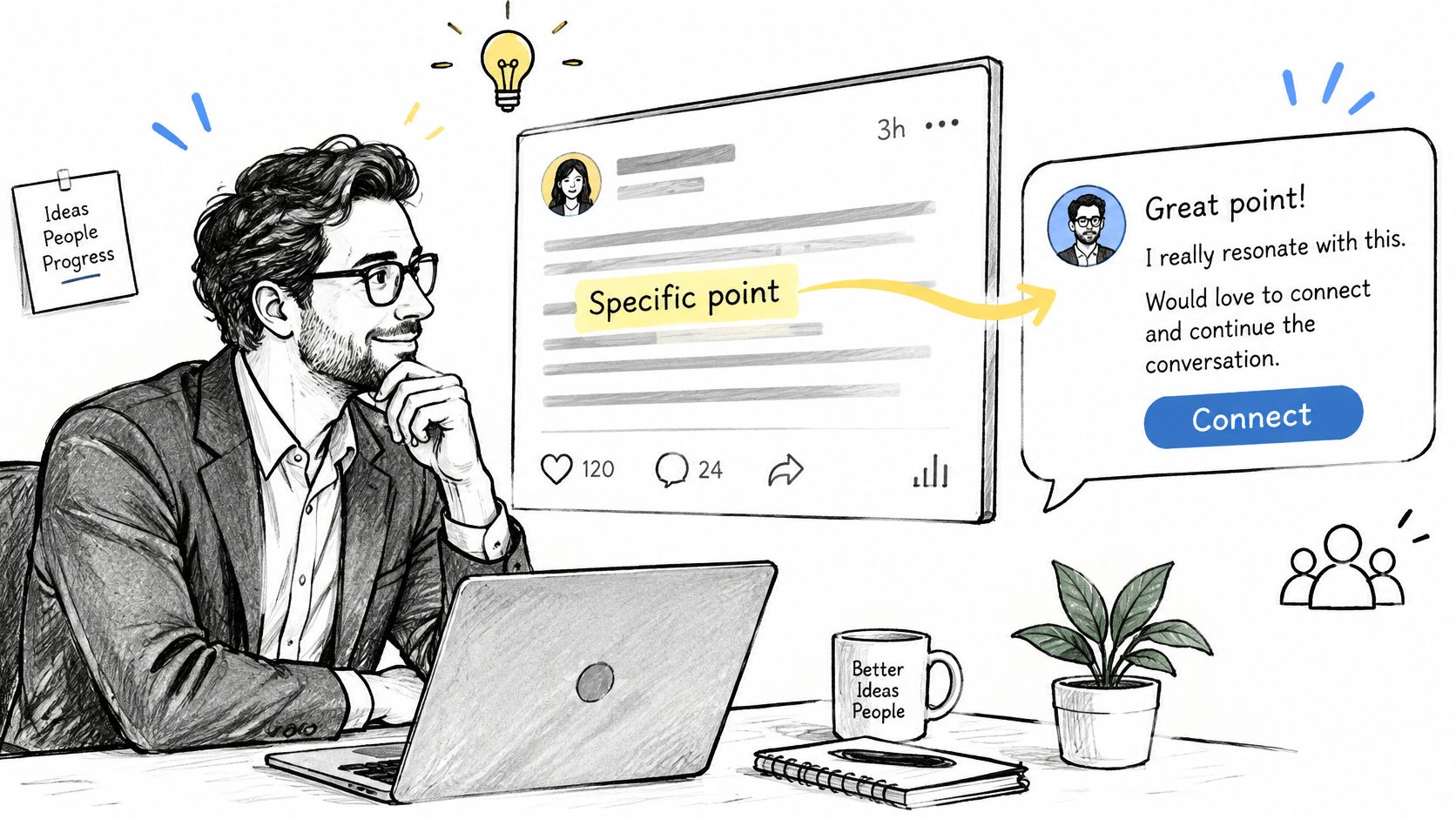
Hi Sam, your post on why agencies lose deals after the first call matched what I see in outbound. Qualifying earlier is the fix I keep coming back to. Glad to connect.
Why it works: It shows you read, thought, and brought relevant experience, so the invitation feels earned.
Ground your observation in your own work without claiming results you can't support. "Great post" notes get ignored because they cost nothing to send.
9. Question-Based Note
A good question gives the prospect something easy and interesting to answer, which is exactly how post-acceptance conversations start.
Hi Rachel, your post on referral dependence was useful. How are you balancing referral work and new outreach as the team grows? Would love to connect.
Why it works: The question is about her stated topic, so replying feels natural instead of obligatory.
Ask one question you'd want answered, and be ready to respond if she replies. Visible, thoughtful engagement also supports the profile activity behind your LinkedIn Social Selling Index, though the reply itself is what matters commercially.
Referral Examples (10-13)
10. Named Mutual Contact Introduction
A named introducer does heavy lifting, but only with permission. Ask first, keep the note short, and let the trusted name carry the credibility.
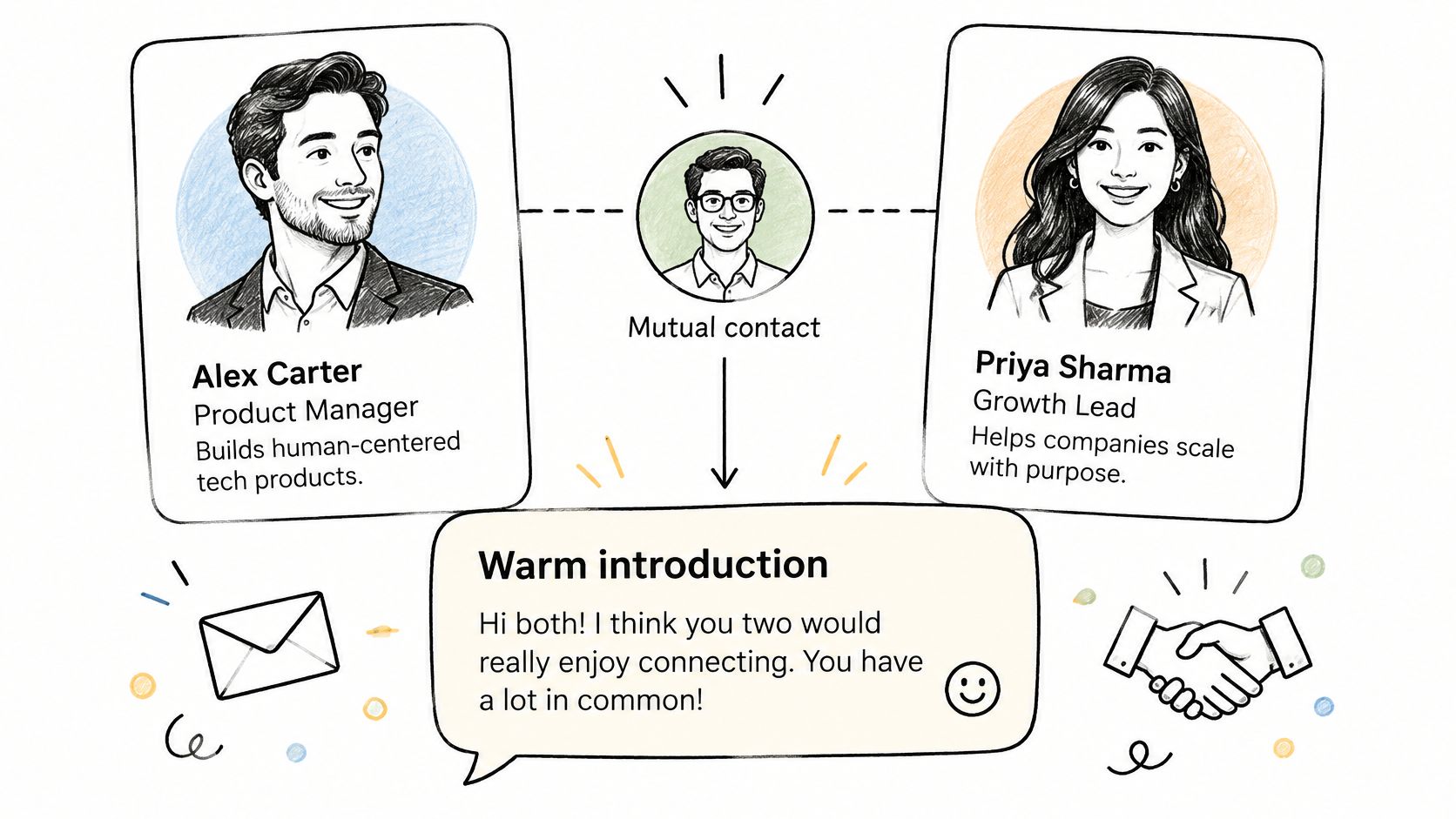
Hi Omar, Jen Walker mentioned you're focused on steady new-client growth at Harbor Legal. I work with professional services firms on outbound prospecting. Glad to connect.
Why it works: Owners who run on referrals trust a named recommendation far more than a cold claim.
Never imply an endorsement the contact didn't give. One borrowed name used without consent can damage two relationships at once.
11. Former Client's Peer Note
Peers of happy clients are often at a similar stage with similar problems. That relevance doesn't require sharing anything confidential.
Hi Grace, Lee Park suggested we connect, since you're both expanding in logistics. I help B2B service firms build outbound pipelines. Happy to share what has worked.
Why it works: It borrows trust and shared context while describing your work only in general terms.
Confirm permission in writing before using a client's name, and never mention their revenue or results in a connection note. If you want a structured way to ask for introductions, our referral page outlines how they're handled.
12. Partner Introduction Note
A partner introduction works when the referrer already sits close to the buyer's decision. Name who made the intro, the problem they flagged, and a small next step.
Hi Kevin, Alisha at Northwind Advisory suggested I reach out. She said you're tightening outbound before Q4. I help B2B owners turn intros into qualified talks. Worth connecting?
Why it works: It converts an introduction into a concrete reason to accept, while letting the prospect set the pace.
Skip this approach if you only have a logo in common, or if the partner can't state the prospect's current priority. An intro without context reads like cold outreach wearing a referral.
13. Complementary Partner Network Note
Use this when a shared contact sits inside the prospect's orbit, like their accountant, attorney, or fractional ops lead.
Hi Casey, Morgan at Westbridge said you advise growing B2B service firms on finance ops. I handle outbound pipeline for the same stage of owner-led company. Open to connecting?
Why it works: The note names the ecosystem, states the boundary, and gives the prospect a low-cost reason to accept.
Check with Morgan first, then keep each role to one precise function. If a conversation starts, compare client-fit signals before suggesting any handoff.
Follow-Up After Accepting Examples (14-15)
These two are first direct messages, not connection notes, so the 200-character cap doesn't apply. Keep them short anyway.
14. Thank-You With a Question
Acceptance isn't interest in buying. Treat the first direct message as a conversation opener, sent within a day or two while your note is still familiar.
Thanks for connecting, Dana. How is your team handling new-business pipeline during the busiest months? Happy to hear what's working.
Why it works: A brief thanks plus one relevant question respects her time and invites a real reply.
Don't pitch here. An instant pitch teaches prospects that accepting you was a mistake. Continue the topic from your original LinkedIn connection request message instead, and let the lead nurturing happen over several useful exchanges.
15. Offer of a Relevant Resource
A short, specific resource gives a new connection a reason to reply without committing to a call. It only works if the resource exists and matches their world.
Thanks for accepting, Marcus. I put together a short checklist on how small agencies scope outbound campaigns. Would it be useful if I sent it over?
Why it works: You're offering something useful, with permission requested first and no obligation attached.
Ask before sending any file or link. A two-page checklist he can use this week beats a polished ebook he'll never open.
All 15 Connection Request Examples at a Glance
Scan by trigger, not by template. Pick the row that matches what you can honestly prove about the prospect, then adapt the opener in your own words.
Example opener
Scenario
Research needed
1
"Hi Dana…"
Cold: service-specific compliment
Name one real focus from the profile or services page
2
"Hi Marcus…"
Cold: growth signal
Confirm the signal is public, recent, and relevant
3
"Hi Priya…"
Cold: direct, low-pressure opener
Title, industry, and a plain reason to connect
4
"Hi Alex…"
Cold: role-specific pipeline challenge
Check the role actually owns new business
5
"Hi Tom…"
Event: speaker follow-up
One specific point from the session
6
"Hi Lena…"
Group: discussion note
Read the thread; confirm you're both active
7
"Hi Jordan…"
Event: attendee follow-up
A real discussion topic, not "great event"
8
"Hi Sam…"
Post: agreement with a specific point
Read the full post; agree with something narrow
9
"Hi Rachel…"
Post: question-based note
A real question the post leaves open
10
"Hi Omar…"
Referral: named mutual contact
Permission to use the contact's name
11
"Hi Grace…"
Referral: former client's peer
Written permission from the client
12
"Hi Kevin…"
Referral: partner introduction
The partner can state the prospect's priority
13
"Hi Casey…"
Referral: complementary partner
Overlap in customer type, no direct conflict
14
"Thanks for connecting…"
Follow-up: thank-you with a question
A question tied to their role and season
15
"Thanks for accepting…"
Follow-up: resource offer
The resource exists and fits their industry
The rows fall into five situations: cold outreach, shared events and groups, posts, referrals, and post-acceptance follow-ups. If the profile gives you nothing but title and industry, use the direct opener instead of forcing a compliment. If a referral is involved, permission matters more than clever wording.
Note vs No Note: When Each Makes Sense
Free LinkedIn members can only personalize a limited number of invitations each month, per the same LinkedIn help guidance, so spend notes where context changes the outcome.
Situation
Send a note?
Why
Referral or named introduction
Yes, always
The name is the reason to accept
Shared event, group, or post
Yes
The context is verifiable and fresh
High-value target account
Yes
Worth the research time and a limited note
Thin profile, no shared context
Optional
Use the direct opener or send without a note
Second-degree contact with obvious role fit
Optional
A credible profile may be enough
Mass list with no research
No
A generic note adds nothing and reads as volume
Turning Accepted Connections Into Sales Meetings
Four patterns run through every example above. Each note gives the recipient a reference they can verify, keeps the pitch out of the first message, makes a small request, and follows up on a permission basis after acceptance.
Measure each stage on its own, as in the 3R Note Budget arithmetic. Acceptance tells you whether your targeting and profile look credible. Replies tell you whether your note created a reason to talk. Meetings tell you whether the conversation qualified. Clear lead qualification criteria keep that last step honest.
Protect the account while you do it. Send to people whose role, company, and activity you can explain in a sentence, and withdraw stale invitations so they don't pile up. A tight, researched list from custom list building does more for results than cleverer wording.
Frequently Asked Questions
What should you say in a LinkedIn connection request? Give one truthful reason to connect, such as a post, event, group, referral, or shared market. Say who you help in a single line if it's relevant, and ask only for the connection.
What is the character limit for a LinkedIn connection note? LinkedIn's help center puts the personalized invitation note at 200 characters. Check the counter after you personalize, and cut adjectives before you cut the specific detail.
Should you always include a note with a connection request? No. Free members can personalize only a limited number of invitations, so use notes for referrals, shared events, posts, and high-value accounts. A generic note adds little over a bare invitation from a credible profile.
Should you pitch in a LinkedIn connection request? No. A pitch in the note asks a stranger for time before they've agreed to talk. Save any offer for later in the conversation, after they've replied.
How soon should you follow up after someone accepts? Within a day or two, with thanks and one question tied to your original note. Wait longer and the context fades. Pitch immediately and you train good prospects to ignore you.
How many LinkedIn connection requests can you send per week? LinkedIn doesn't publish one fixed number for everyone, and limits can change. Quality matters more than volume: a researched list with a clear reason per contact keeps acceptance healthy and the account safe.
Do these examples work for LinkedIn cold outreach at scale? The structure does, the exact wording doesn't. Keep the 3R pattern and swap in a real reason for each prospect. If you can't find one, use the direct opener rather than faking personalization.
If consistent prospecting keeps losing to client work, the constraint is capacity, not copy. Outbound Consulting is a linkedin outreach agency that runs managed outreach, custom list building, qualification, and nurturing for SMBs; you can see how packages are structured on the pricing page.
If your team is too stretched to research prospects, personalize notes, and follow up consistently, visit Outbound Consulting to see how a structured outreach program could turn connection requests like these into a steadier flow of qualified sales meetings.