A qualified lead is a prospect who fits your ideal client profile, has a problem you solve, can reach the budget, and has a business reason to act now. Most interest never clears that bar: Salesforce's MQL vs. SQL guide cites Gartner research showing just 21% of MQLs convert to SQLs. Below are seven signs that separate a qualified outbound lead from a friendly reply, the check to run on each, and a scoring sheet you can copy.
Qualified lead (definition): a prospect with confirmed fit, a relevant problem, access to the buying decision and a dated reason to act, which together justify a sales conversation.
For a referral-dependent consulting firm, agency or SaaS business, the expensive mistake is treating every friendly conversation like a warm introduction. An outbound prospect hasn't received the context or recommendation that comes with a referral, so you establish those facts before committing calendar time.
Qualification doesn't require an interrogation. Use the reply to identify what's known, ask about the most important gap, and choose the next step. The framework comparison from PreSales Unleashed is useful when deciding how much structure your sales process needs: BANT screens early deals, MEDDIC inspects complex ones.
The signs below use illustrative LinkedIn replies, not customer transcripts. Each gives you a signal to look for and a check to run before proposing a conversation.
Table of Contents
- Lead vs. Qualified Lead at a Glance
- 1. Names a specific problem and a recent trigger
- 2. Confirms they own the budget or can route the decision
- 3. Mentions a real timeline or deadline
- 4. Acknowledges current spend or an existing provider
- 5. Matches your ideal client profile on company, industry and role
- 6. Asks a specific question about process, proof or the team
- 7. Agrees to a next step with a stated purpose
- The Five-Gate Reply Score: Qualify a Reply in Two Minutes
- How MQL, SQL and Sales-Accepted Meetings Differ
- Qualified Lead FAQ
- Turn Qualified Replies Into Steady Sales Meetings
Lead vs. Qualified Lead at a Glance
A lead is anyone who might buy. A qualified lead is a lead you have checked. Our guide to prospects vs. leads covers the naming in more depth; the practical difference looks like this:
Lead
Qualified lead
What you know
Name, company, maybe a reply
Fit, problem, access to the decision, timing
Typical source
List, form fill, connection accept
A conversation that answered your qualification questions
Next step
Research, outreach, nurture
Discovery or sales conversation
Risk if you call too early
Wasted call, burned contact
Low: the call has a stated purpose
1. Names a specific problem and a recent trigger
We lost our largest referral partners recently, and our pipeline looks thin for the coming quarter. How do you help firms like ours rebuild?
Replies like this give you two things to work with: a named problem and a dated cause. A qualified outbound lead describes a problem your business can solve and explains what changed to make it matter. A lost account, leadership change or stalled pipeline gives you something concrete to investigate; vague unhappiness does not.

The check: Has that already reduced sales conversations, or are you planning ahead before the gap reaches revenue? A live problem sets a different urgency from a forecast one. Record the trigger, its timing and its effect in your CRM.
A strong problem statement earns a follow-up question, not a proposal. Our lead qualification service starts from the same rule: separate a relevant business problem from general interest before anyone books a call.
Practical rule: Ask about the problem before pitching the solution. The answer should change what you recommend.
2. Confirms they own the budget or can route the decision
A prospect qualifies on authority when they can approve the purchase or provide a credible path to whoever can. Title alone doesn't settle it.
I run operations and approve outside sales support. What would getting started involve?
Compare that with:
I'd need to bring our managing partner in, but I'm happy to talk through the basics first.
The second contact isn't automatically unqualified. You need to know whether they're an internal sponsor or collecting information.

The check: If this looks suitable, how would you and the managing partner evaluate it? A useful answer names the people involved and their roles. Our guide to who the decision-makers are helps separate the person feeling the problem from the person approving the spend.
- Approval: Who can authorize the engagement?
- Funding: Is budget available, or would someone need to create it?
- Access: Can your contact involve the approver in a meaningful next step?
Authority and budget aren't interchangeable. Someone may control spending but have no funding; someone else may have an approved project but need procurement to buy.
3. Mentions a real timeline or deadline
A qualified lead's timeline connects to a business event: a contract renewal, a launch, a planned expansion.
Our agency contract renews in October, and we want to compare alternatives before then.
That establishes a possible decision window. It doesn't establish that they're free to switch, that budget is approved or that October is the start date.
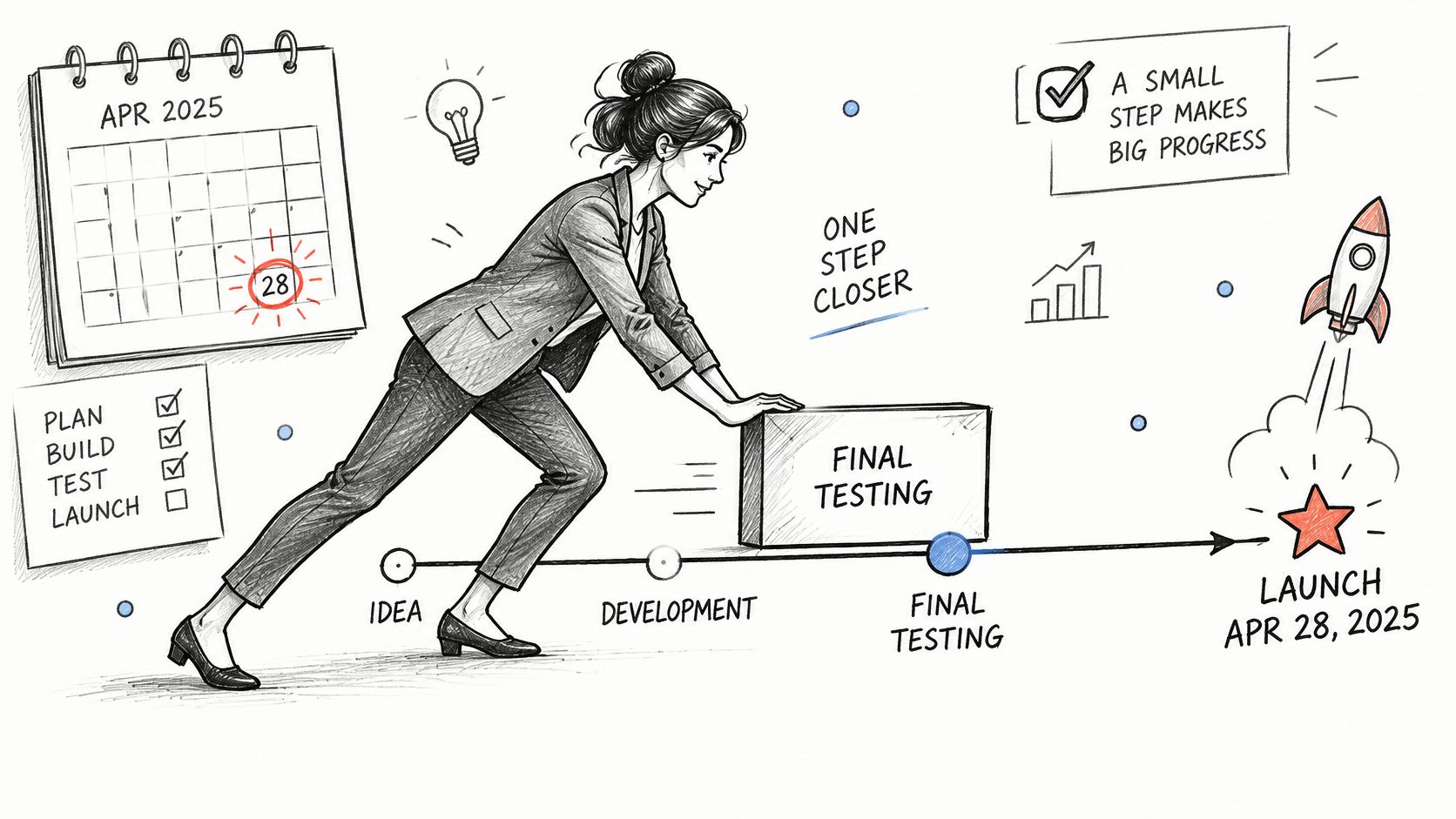
The check: When would you need to choose a provider, and is there a notice period on the current contract? Then ask what happens if the decision slips. Put the decision date and the follow-up date in separate CRM fields; a clear B2B sales process keeps commercial milestones apart from reminders.
A real deadline changes the buyer's next action. A vague preference doesn't.
4. Acknowledges current spend or an existing provider
A reply that names an agency, CRM, intern or tool tells you money is already attached to the problem.
We're paying an agency, but the meetings rarely fit the services we sell.
We use our CRM and an intern for outreach, but nobody has time to follow up consistently.
These describe different gaps. The first may need tighter targeting and qualification; the second needs ownership and execution capacity.
The check: What are you paying for now, which part is failing, and what would make switching worth it? Then confirm scope, exit terms and the result that would justify the disruption. The in-house versus outsourcing decision should follow the actual capacity gap: outsourcing won't fix an unclear offer, and hiring won't create a consistent qualification process.
5. Matches your ideal client profile on company, industry and role
A qualified lead must match the businesses you can serve profitably. Urgency and enthusiasm don't compensate for an account outside your offer.
We're an accounting firm with recurring business clients, but the partners still handle all new business themselves.
That could fit a sales-support offer aimed at professional services. It still needs checking: do they want the clients you can help them reach, and can they take on more work?
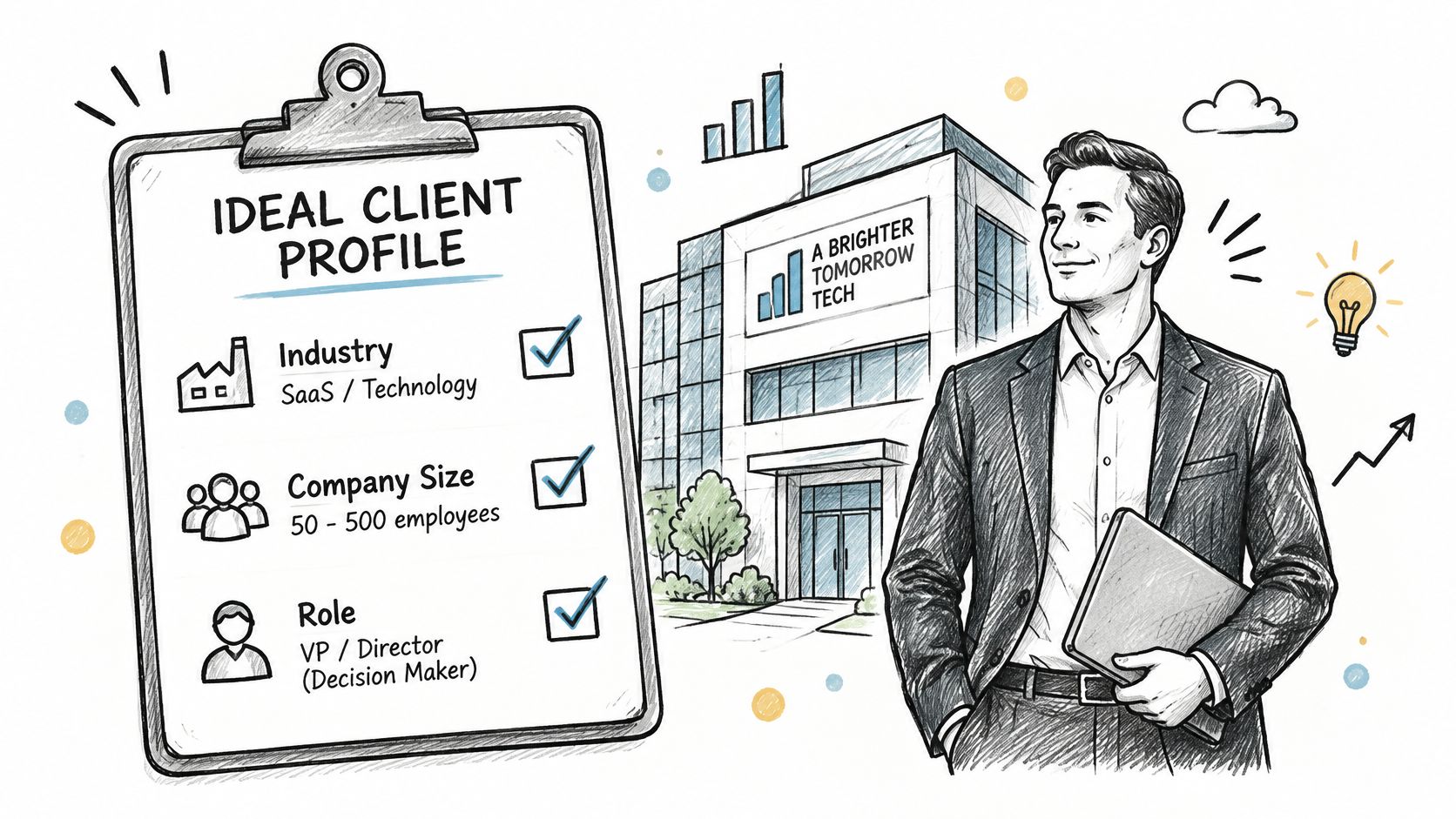
The check: treat fit as a gate, not a bonus. Use an ideal customer profile template to separate mandatory requirements from preferences, then validate what public data can't show:
- Buyer alignment: Does the prospect sell to the audience your approach can reach?
- Commercial fit: Can their deal economics support the investment?
- Delivery capacity: Can they serve more customers without hurting existing work?
Don't let a friendly founder override an obvious mismatch. Record why the account fails and use it to improve targeting.
6. Asks a specific question about process, proof or the team
Specific questions about delivery suggest the prospect is picturing how your offer would work in their business.
What does getting started look like, and who would I work with day to day?
Do you have an example from a firm like ours? I'd want to understand the process, not just the headline result.
Answer directly; don't withhold basic information to force a call. The check: Are you comparing approaches for an active project, or working out whether this belongs in your plans? The first supports a buying conversation; the second suggests education. Your lead qualification process should keep that distinction, because a request for proof doesn't establish authority, budget or timing by itself.
If a prospect prefers to share project details asynchronously, a short intake form built with the Kiwiform online form builder can organize the conversation. Keep it short and don't ask again for what they've already told you.
7. Agrees to a next step with a stated purpose
A qualified next step names the business outcome, the people required and why the conversation should happen now.
A call to review our referral pipeline would help. Please include our operations lead because she'll help evaluate the options.
The check: before sending the invite, write the agenda in one sentence, name each attendee's role in the decision, and state the single decision the call must answer. If any item stays vague, ask for it in the thread.
Salesforce's lifecycle definitions mark the handoffs the same way: a lead becomes an MQL when marketing qualifies and assigns it to sales, and an SQL when sales qualifies it and associates it with an opportunity. A calendar booking is a third event, covered in the table below.
Outbound Consulting's sales development services qualify replies and hand suitable prospects to the client's sales process; the client still runs the call and owns the decision. The video below is a useful meeting-prep pass: purpose, attendees, decision.
The Five-Gate Reply Score: Qualify a Reply in Two Minutes
The seven signs collapse into five gates. Score each reply 0 (unknown or no), 1 (partly confirmed) or 2 (confirmed). Fit is mandatory: a 0 on fit disqualifies the reply whatever the total.
Gate
0
1
2
Fit (company, industry, role)
Outside your ICP
Matches on paper, unverified
Verified in conversation
Problem
None stated
General pain
Named problem and trigger
Access
Unknown
Influencer, route unclear
Approver or named route to approver
Timing
"Someday"
Quarter or season
Dated event (renewal, launch)
Next step
None
Open to talk
Agreed step with purpose and attendees
Routing rule: 8–10 = SQL, book the call; 5–7 = ask one question about the lowest gate; 0–4 = nurture.
Worked example (illustrative inputs). The contract-renewal reply in sign 3 scores Fit 2 + Problem 1 + Access 0 + Timing 2 + Next step 1 = 6/10. Don't book yet; ask the access question from sign 2. If the answer names the managing partner and adds them to the thread, Access becomes 2 and the total becomes 8/10, an SQL.
Pipeline arithmetic (example numbers). Say a campaign produces 50 positive replies a month and 30% score 8 or more. That is 50 × 0.30 = 15 SQLs. If your sales owner can run 10 discovery calls a month, you don't need more replies; you need to raise the access and timing scores of the 5–7 group, which is a qualification job, not a volume job. Swap in your own reply count and pass rate.
How MQL, SQL and Sales-Accepted Meetings Differ
MQL asks whether the prospect deserves attention. SQL asks whether sales should work the deal now. A sales-accepted meeting asks whether a specific booked call is worth keeping.
Stage
Definition
Typical signal
Required evidence
Owner
MQL
Fits your target market and shows relevant interest worth checking
A reply from a matching company and role that engages with the message
Verified fit on industry, company size and role, plus genuine interest
Marketing or whoever runs qualification review
SQL
Sales has verified enough fit, need and buying context to start a sales process
The thread contains a named problem, decision access and a real timeline
Five-Gate score of 8+ with fit confirmed
Sales owner, based on evidence in the thread
Sales-accepted meeting
The sales owner commits to a specific booked conversation
Prospect agrees to a call with a stated agenda
Confirmed time, purpose and attendees on the calendar
Sales owner accepts it; the prospect confirms attendance
Evidence builds across a thread, so judge the whole conversation. "We're reviewing providers before our contract renews in Q3, can you share sample work?" shows interest and a deadline: MQL until you confirm fit and decision access, then SQL. The sales-accepted meeting comes last, when the invite lands with an agenda.
The trade-off: strict thresholds slow the pipeline; loose ones fill the calendar with calls that stall. Losing a week checking evidence beats losing a quarter chasing a polite thread.
Qualified Lead FAQ
What is the difference between MQL vs. SQL?
An MQL meets your marketing fit criteria and warrants continued engagement. An SQL has passed sales review and clears your bar for a live buying conversation. "Interesting timing, we're reviewing our outbound setup next quarter" stays an MQL until budget access is confirmed; "How would you build our list, and who runs outreach?" signals active evaluation and earns SQL review.
What is the difference between a lead and a qualified lead?
A lead is any contact who might buy. A qualified lead has been checked against your criteria (fit, problem, access, timing) and passed. The check is what turns a name into a reason to spend sales time.
What makes a lead unqualified?
Failing a mandatory criterion: outside your ICP, no problem you solve, no route to the decision, or a market you can't serve. Missing information is different from failing; an unknown answer means ask, a "no" means stop.
Can a lead be qualified without being ready for a call?
Yes, when fit and problem are confirmed but timing isn't. "Looks useful, but our contract renews in March" is qualified for lead nurturing, not a call. Agree on a dated check-in instead of pushing discovery.
What is lead scoring versus lead qualification?
Lead scoring ranks prospects by signals like seniority, company size and reply type. Lead qualification decides whether the evidence meets your criteria for a specific action. A highly engaged contact can still fail a mandatory fit requirement.
How much does a qualified lead cost?
It depends on the channel, the deal size and how strict your definition is, which is why comparing cost per lead across vendors rarely works unless they use the same definition. Compare cost per sales-accepted meeting instead, and see the pricing page for how our engagements are structured.
How do I get more qualified leads?
Tighten targeting before adding volume. Unqualified replies often trace back to list fit, so fix the ICP, write messages that name a specific problem, and score every reply with the same gates so you can see which one fails most often.
Turn Qualified Replies Into Steady Sales Meetings
A reply is ready for closer review when it contains a business reason, a reachable buyer and a next action. Classify it before it reaches the calendar: a small team can do that in one shared CRM view with three fields for fit, readiness and next step.
Use one operating rule: every sales-ready reply must name a fit, a business problem, buying access, timing and a next step with a purpose. If one item is unknown, resolve it first. If one item fails, stop advancing it.
The channel doesn't change the standard. A team using a cold calling script for SDRs still needs relevance and buying context. Outbound Consulting (2,000+ small businesses served, company-reported) runs outreach on LinkedIn only, reviews replies for fit, need and timing, and hands suitable prospects to the client's sales process; the client takes the sales call. Steady meetings come from repeatable routing, not from treating every positive reply as urgent.
See how our lead qualification works for your target buyers, or visit Outbound Consulting to discuss your qualification criteria.